Roof Repairs
Leak tracing and tile repairs across Blacktown, where hail damage and tired concrete tile drive most of the work.
Learn more →Full re-roofing across Blacktown City in tile or Colorbond, including tile-to-metal conversions and asbestos-era homes. Free inspection and itemised quote.
A roof that needs replacing rather than repairing gives the same signals every time:
If two or three of those apply, money spent on patching is money spent twice.
Blacktown City has an unusually wide spread of housing stock for one council area, and a re-roof means something different in each.
Through Blacktown, Seven Hills, Lalor Park and Marayong there is a solid layer of post-war cottages. Some still carry their original roof, some were re-tiled once in the 1980s. These jobs often involve asbestos-era sheeting somewhere on the building, older undersized battens, and no sarking at all.
The large estates built from the mid-1960s — Bidwill, Emerton, Shalvey, Tregear, Whalan, Willmot, Blackett and Hebersham among them — went up in a short window and were largely sold into private ownership later. That means the concrete tile roofs across whole streets are the same age and are reaching the end of their service life at roughly the same time. Replacement here is usually about tiles that are simply worn out rather than any one event.
Out at Schofields, The Ponds, Quakers Hill, Glenwood and Parklea the roofs are metal and much younger. Full replacement is rare; what we do see is hail-damaged sheeting, failed penetrations and workmanship faults from the original build.
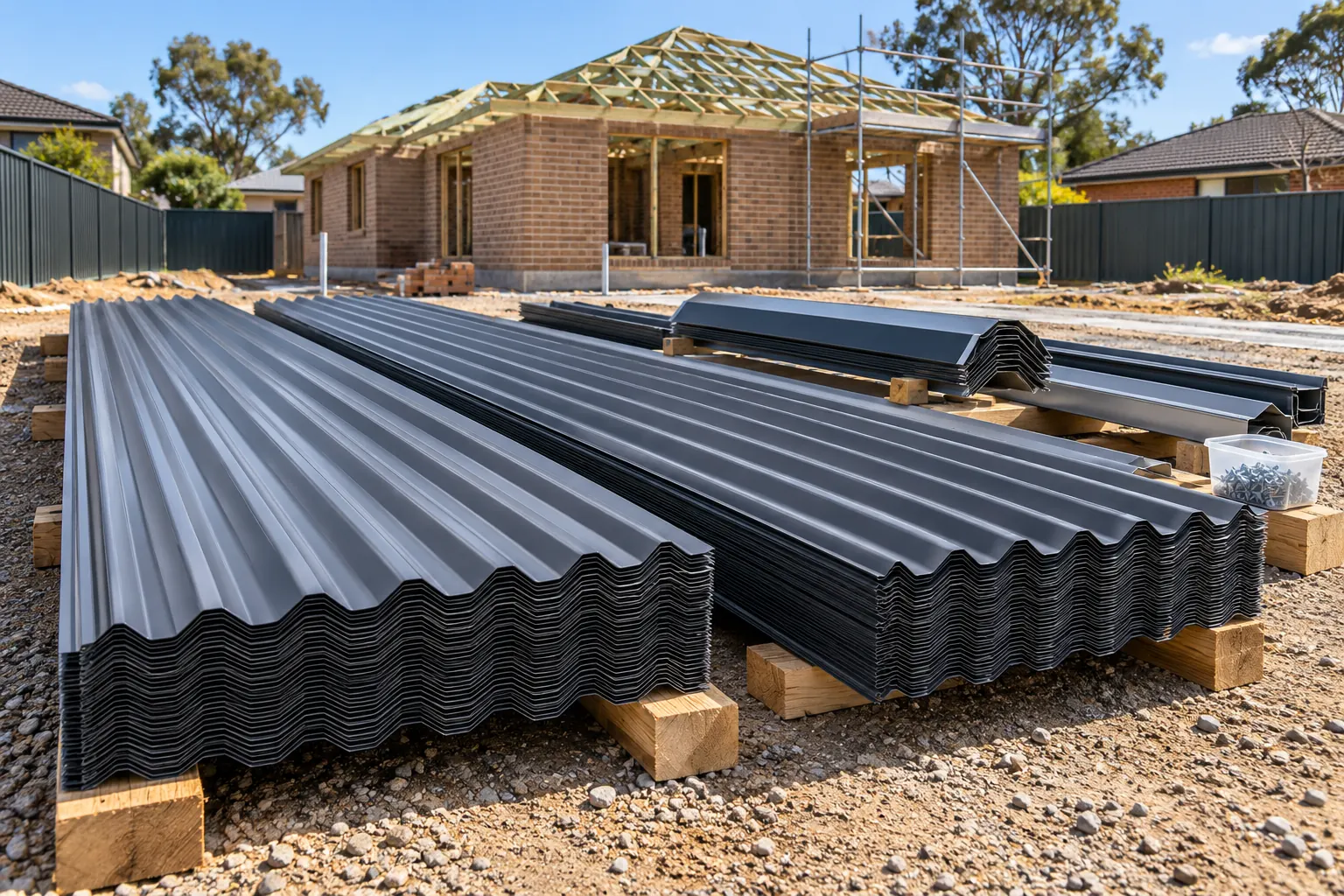
Both are reasonable choices in western Sydney. The honest comparison:
| Concrete or terracotta tile | Colorbond steel | |
|---|---|---|
| Look | Matches most of the older brick-and-tile streets | Suits newer builds and modern renovations |
| Weight | Heavy; the frame has to be built for it | Light, which reduces load on old timber |
| Hail | Chips and cracks; individual tiles replaceable | Dents and can split the paint film; usually repaired in sheets |
| Maintenance | Ridge pointing needs attention over time | Fixings and flashings need checking; fewer rigid parts |
| Heat and noise | More thermal mass | Needs good insulation and sarking under it, which we spec in |
| Repairs later | Swap one tile | Replace a sheet or a run |
The genuinely important part on a metal re-roof is what goes underneath: sarking, correct insulation and ventilation. A cheap metal roof over a bare ceiling in a Blacktown summer is a mistake you feel in February.
Talk it through on (02) 4705 5200 before you commit to either.
Nobody can price that off a satellite image. We inspect, then quote in writing with each item listed.
Across the council area, including Blacktown, Seven Hills, Doonside, Rooty Hill, Mount Druitt, Whalan, Tregear and north through Quakers Hill and Riverstone. Full list on the service areas page.
Not sure yet whether you need a new roof or a restoration? That is exactly what the free inspection is for. Call (02) 4705 5200 or request a quote and we will tell you straight.
Leak tracing and tile repairs across Blacktown, where hail damage and tired concrete tile drive most of the work.
Learn more →Colorbond installation and tile-to-metal conversions across Blacktown, Mount Druitt and the newer Schofields and The Ponds estates.
Learn more →Restoring Blacktown tile roofs where the tiles are sound but the pointing has gone: clean, rebed, repoint, recoat.
Learn more →Gutter and downpipe replacement built for western Sydney storm volume, with leaf guard where it is needed.
Learn more →Hail and storm response across Blacktown, with a documented inspection suitable for an insurance claim.
Learn more →Independent roof inspections and written reports across Blacktown for buyers, owners and insurers.
Learn more →Tell us what you need and we'll get straight back to you. Prefer to talk? Call (02) 4705 5200 and speak to someone local.
Call (02) 4705 5200There is no single number, but the pattern here is clear enough. Concrete tiles laid on the 1960s and 70s estates are now well past 50 years and many are porous or brittle. The 1980s and early 90s estates around Oakhurst, Woodcroft and Hassall Grove are typically still restorable. Age is a guide; what decides it is whether the tiles themselves are still shedding water and strong enough to walk on.
Usually the existing timber framing stays and battens are adjusted or replaced to suit the new sheet spacing. Metal weighs far less than concrete tile, so you are reducing load rather than adding it. What we check first is the condition of the rafters, battens and fascia, because long-term leaks around valleys often leave timber that has to be replaced before anything new goes on.
It gets treated properly. Under NSW work health and safety rules, removal of more than ten square metres of non-friable asbestos must be carried out by a licensed asbestos removalist, with correct containment and waste disposal. If the inspection suggests asbestos sheeting, that part of the job is quoted separately and done by a licensed removalist before the new roof starts.
A straightforward like-for-like re-roof is generally treated as maintenance and can fall under exempt development, provided it meets the standards in the NSW Codes SEPP and does not involve structural change. Heritage-listed properties, heritage conservation areas and bushfire-prone land are the exceptions and can need consent. We tell you if your job looks like one of those before it starts, and Blacktown City Council can confirm.
On a typical single-storey home a re-roof usually runs a few days, with the roof stripped and the new cover going on section by section rather than all at once, so the house is never left wide open overnight. Weather decides the rest. We will not strip a section with a storm cell forecast for that afternoon, which through the warmer months is a real consideration out here.