Roof Repairs
Leak tracing and tile repairs across Blacktown, where hail damage and tired concrete tile drive most of the work.
Learn more →Colorbond and metal roofing in Blacktown City: new installs, tile-to-metal conversions, hail-damaged sheet replacement, flashings and penetrations.
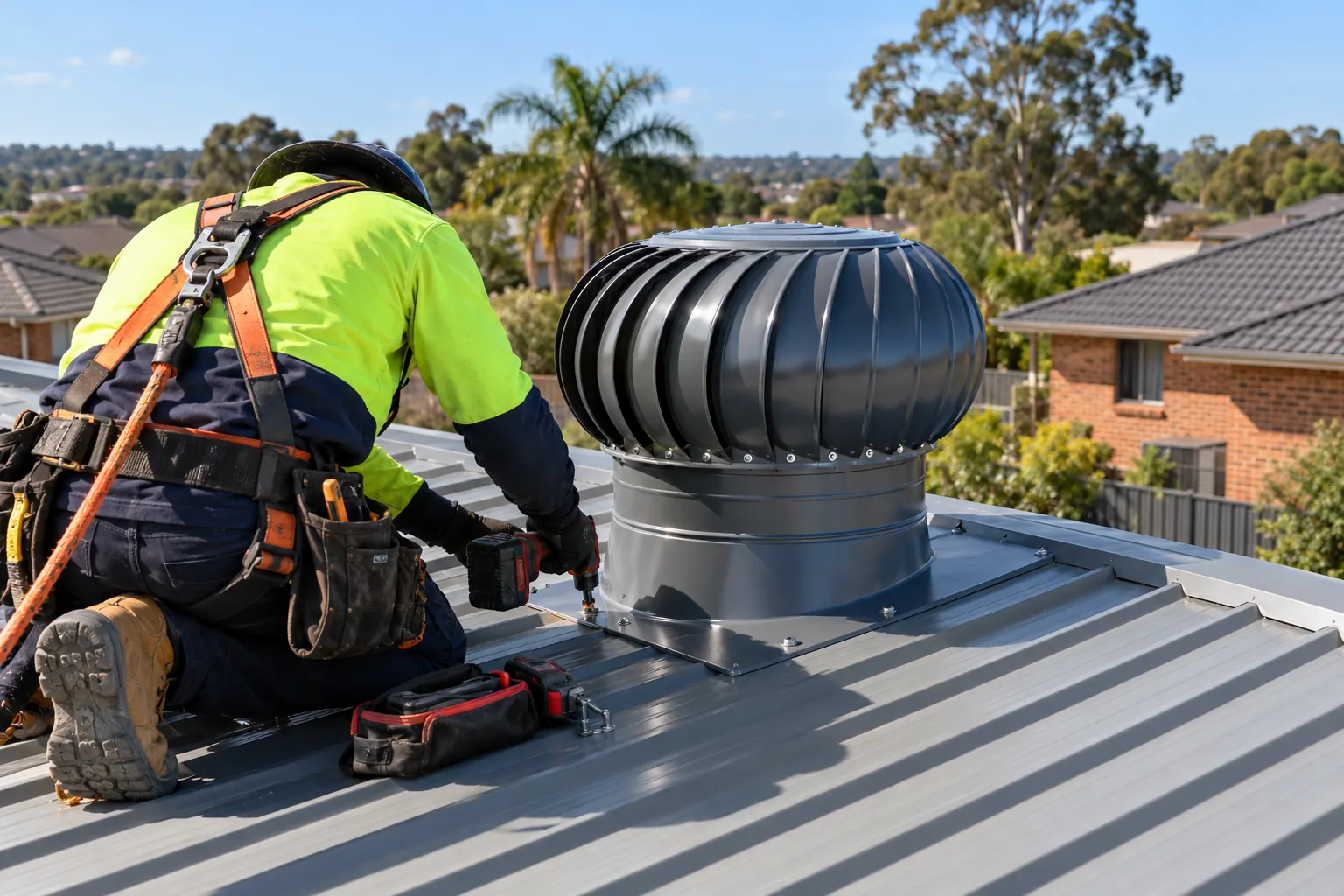
Drive north from Blacktown through Quakers Hill to Schofields and The Ponds and the roofscape changes entirely. The brick-and-tile cottage gives way to two-storey builds with large, simple steel roof planes, narrow eaves and plenty of penetrations — solar, flues, whirlybirds, skylights.
Those roofs fail differently from the tile roofs south of the railway, and they need a different set of eyes.
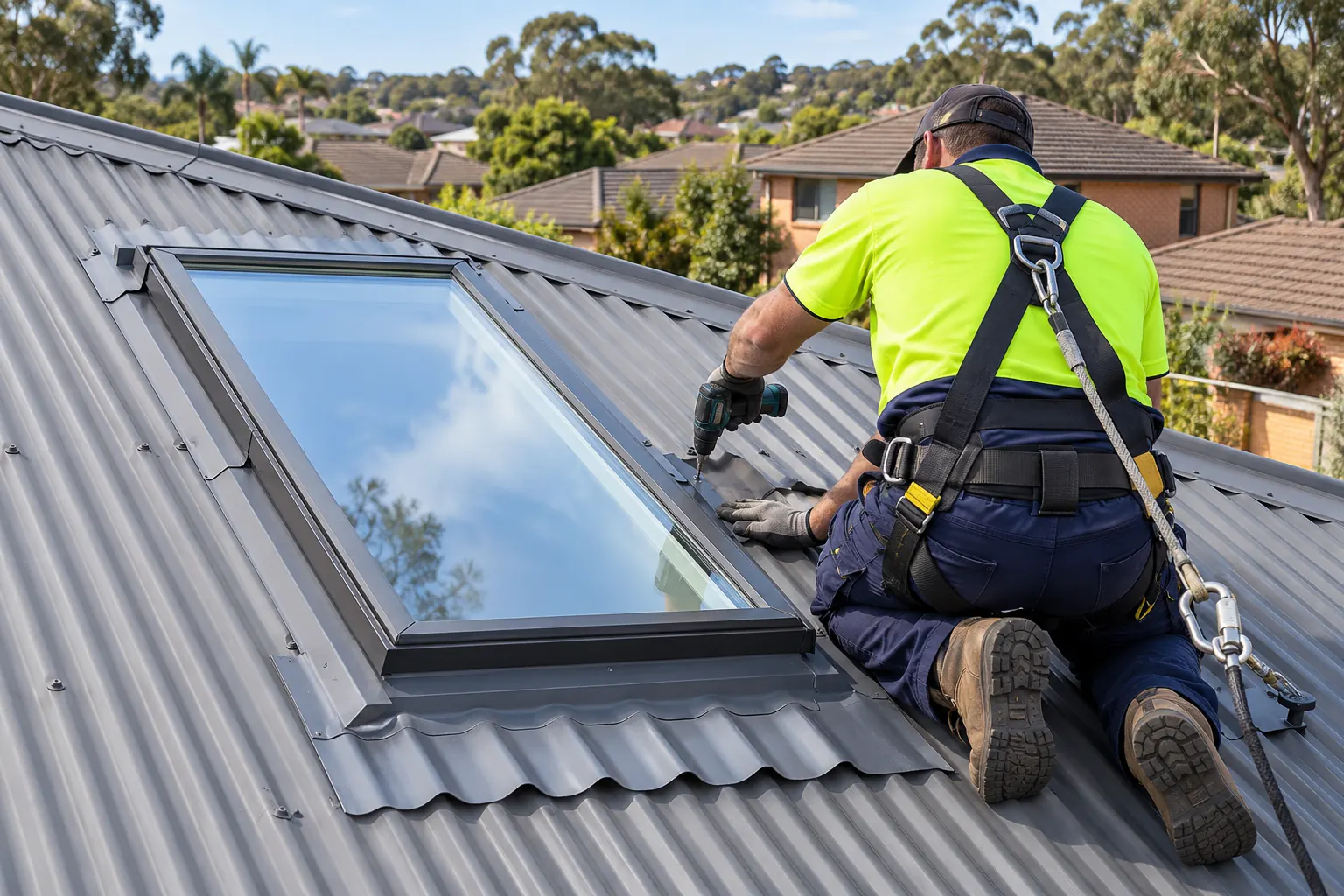
Any roofer can lay sheets down a plane. Metal roofs leak and corrode at the edges and interruptions, so that is where the work is.
Screws go through the crest or the pan depending on the profile, driven to the right depth. Overdriven screws crush the rib and dimple the sheet; underdriven screws leave the washer unsealed. Washers perish with UV, which is why a twenty-year-old roof often needs re-screwing rather than replacing.
Flashings need enough cover and the right upstand, and sheets need their side laps turned the correct way for the fall. Short-sheeting a wall flashing by thirty millimetres is invisible from the ground and leaks for the next decade.
Plenty of alfresco and extension roofs around the newer estates sit at a very low pitch. Low pitch means water moves slowly, backs up at laps, and ponds behind a badly set flashing. It has to be detailed for the pitch it is actually at.
Copper or unprotected steel in contact with Zincalume or aluminium sets up corrosion. So does leaving swarf and offcut filings on a new roof — they rust and pit the coating. A clean-down at the end is not cosmetic.
Questions about a specific roof? Call (02) 4705 5200.
This is the single most common reason we are called onto a metal roof in Blacktown City, and it is worth understanding before an assessor arrives.
| What we find | What it usually means |
|---|---|
| Light, shallow dimpling in the pans | Cosmetic; coating intact; monitor it |
| Dents with cracked or flaked paint film | Coating breached — corrosion will follow; repair or replace the sheet |
| Deformed or flattened high ribs | Structural to the sheet; it no longer sheds and laps correctly |
| Split or punctured sheet | Replacement of the affected sheets |
| Damaged flashings, gutters and whirlybird cowls | Often the worst-hit parts, and often the ones missed |
We document it with dated photographs and a written description so you have something usable for a storm damage claim or a formal roof report.
The usual reasons people do it here: the concrete tiles are at the end of their life, the house has had one restoration already, and the owner does not want to repoint ridge caps again in eight years.
What the conversion gives you is a much lighter roof, fewer rigid components to crack as the house moves on reactive Cumberland Plain clay, and the chance to put proper sarking and insulation in while the roof is open. What it changes is the look of the house, which matters on a street of consistent brick-and-tile — worth thinking about before you decide.
Compare it against a full tile replacement or a restoration of the tiles you already have. We will quote whichever genuinely suits the house.
Free inspection first, then an itemised written quote. No deposit to find out where you stand.
Metal work takes us right across the service area — new estate roofs at Schofields, The Ponds, Glenwood and Acacia Gardens, conversions and patio roofs through Quakers Hill, Woodcroft and Glendenning, and older metal roofs around Riverstone.
Call (02) 4705 5200 or send through your roof details and we will come out and look at it properly.
Leak tracing and tile repairs across Blacktown, where hail damage and tired concrete tile drive most of the work.
Learn more →Re-roofing for Blacktown post-war fibro and brick-veneer homes, and for estates where the original tile has failed all at once.
Learn more →Restoring Blacktown tile roofs where the tiles are sound but the pointing has gone: clean, rebed, repoint, recoat.
Learn more →Gutter and downpipe replacement built for western Sydney storm volume, with leaf guard where it is needed.
Learn more →Hail and storm response across Blacktown, with a documented inspection suitable for an insurance claim.
Learn more →Independent roof inspections and written reports across Blacktown for buyers, owners and insurers.
Learn more →Tell us what you need and we'll get straight back to you. Prefer to talk? Call (02) 4705 5200 and speak to someone local.
Call (02) 4705 5200Steel sheeting handles hail better than concrete tile in the sense that it rarely lets water straight in. What it does is dent, and heavy hail can split the paint film along the high ribs, which is where rust starts years later. Light dimpling is usually cosmetic. Split coating and deformed ribs are not, and that distinction is what an assessment needs to get right.
Bare metal over an unlined ceiling is noticeably louder. Properly built, the difference is small. The variables are sarking directly under the sheet, the type and depth of insulation above the ceiling, and whether the battens and fixings are correct so nothing drums or works loose. We spec those in rather than treating them as optional extras.
The tiles and old battens come off, the timber is checked and repaired where leaks have done damage, new battens are set at the spacing the sheet profile needs, sarking goes down, then the sheets, flashings, valleys and ridge. Metal is far lighter than concrete tile, so you are taking weight off the frame. Gutters and downpipes are often worth doing at the same time.
Because sheeting is rarely the problem. On the estate roofs around Schofields, The Ponds and Glenwood the leaks we find are at penetrations and junctions: solar bracket seals that have perished, flues and whirlybirds with tired collars, short flashings at parapet and wall junctions, and valleys with too little fall. Those are detail faults, not material faults.
Often yes, if the profile and colour are still in production. Fading means a new sheet beside a twenty-year-old one will never be a perfect match, so on a visible roof plane we will tell you honestly whether a partial replacement will look patchy and what the alternatives are. We would rather raise that before the sheets are ordered.