Roof Repairs
Leak tracing and tile repairs across Blacktown, where hail damage and tired concrete tile drive most of the work.
Learn more →Clean, rebed, repoint and recoat ageing concrete tile roofs across Blacktown. Honest advice on whether restoration suits your roof, with a free inspection.
There is a moment in a tile roof's life where nothing has actually collapsed but everything is tired. The caps are still up there, but the white pointing is powdery and falling into the gutter. Moss has taken the south-facing plane. The surface colour has gone chalky and the tiles stay wet for a day after rain. One valley is showing rust at the bottom.
That roof is not finished. It is due. Restoration is what you do at that point, and across the 1980s and 1990s estates of Blacktown City there are whole streets sitting exactly there.
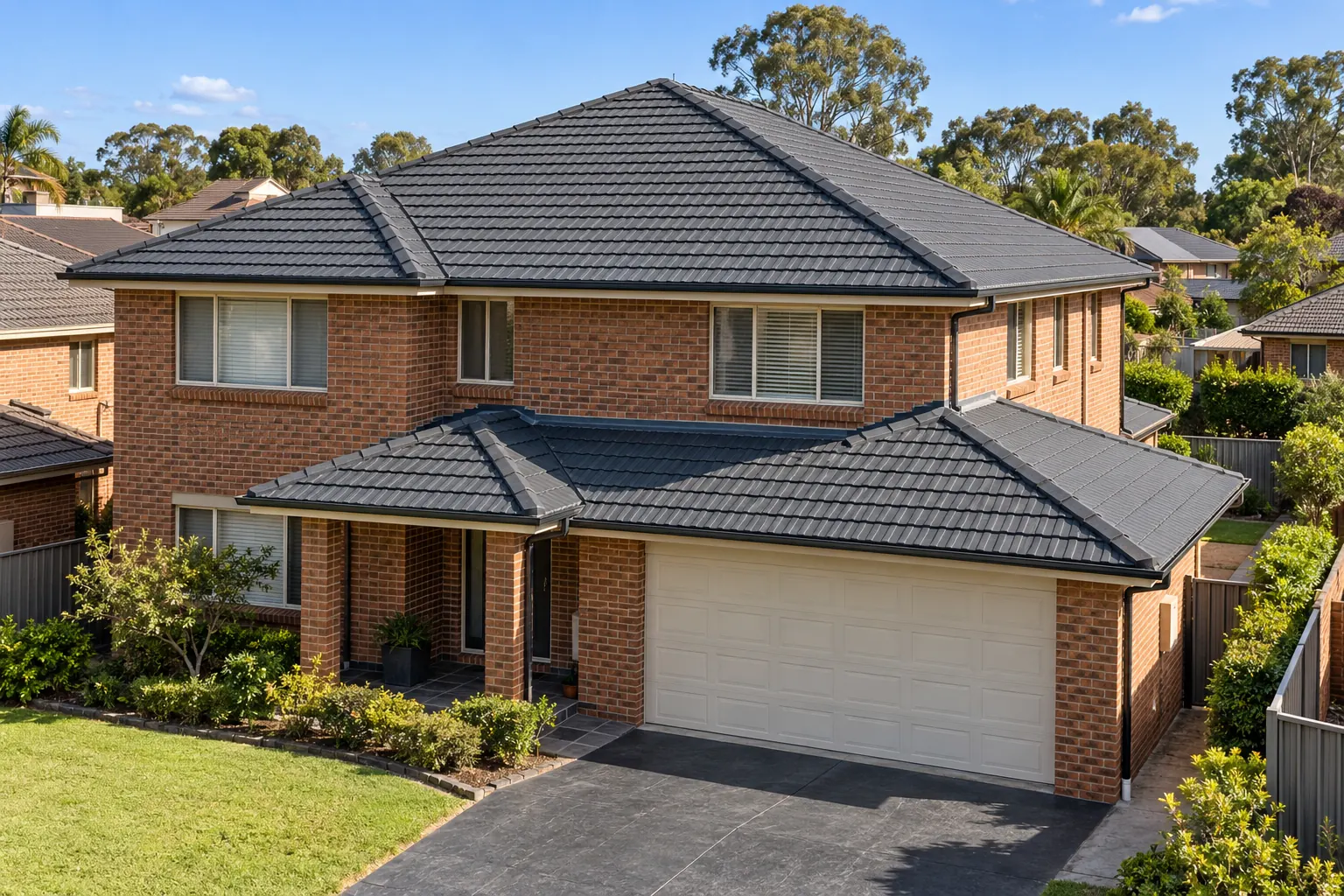
Free, and non-negotiable in the sense that we will not quote a coating on a roof we have not walked. We check tile condition, bedding and pointing, valleys, flashings, penetrations, gutter falls, and the roof space underneath where access allows.
Cracked, chipped and hail-damaged tiles out, matched tiles in. Rusted valley irons replaced. Flashings re-dressed. Any of this left in place will undo the rest of the work.
Years of lichen, moss and oxidised surface come off. The gutters and downpipes get flushed after, because that debris has to go somewhere.
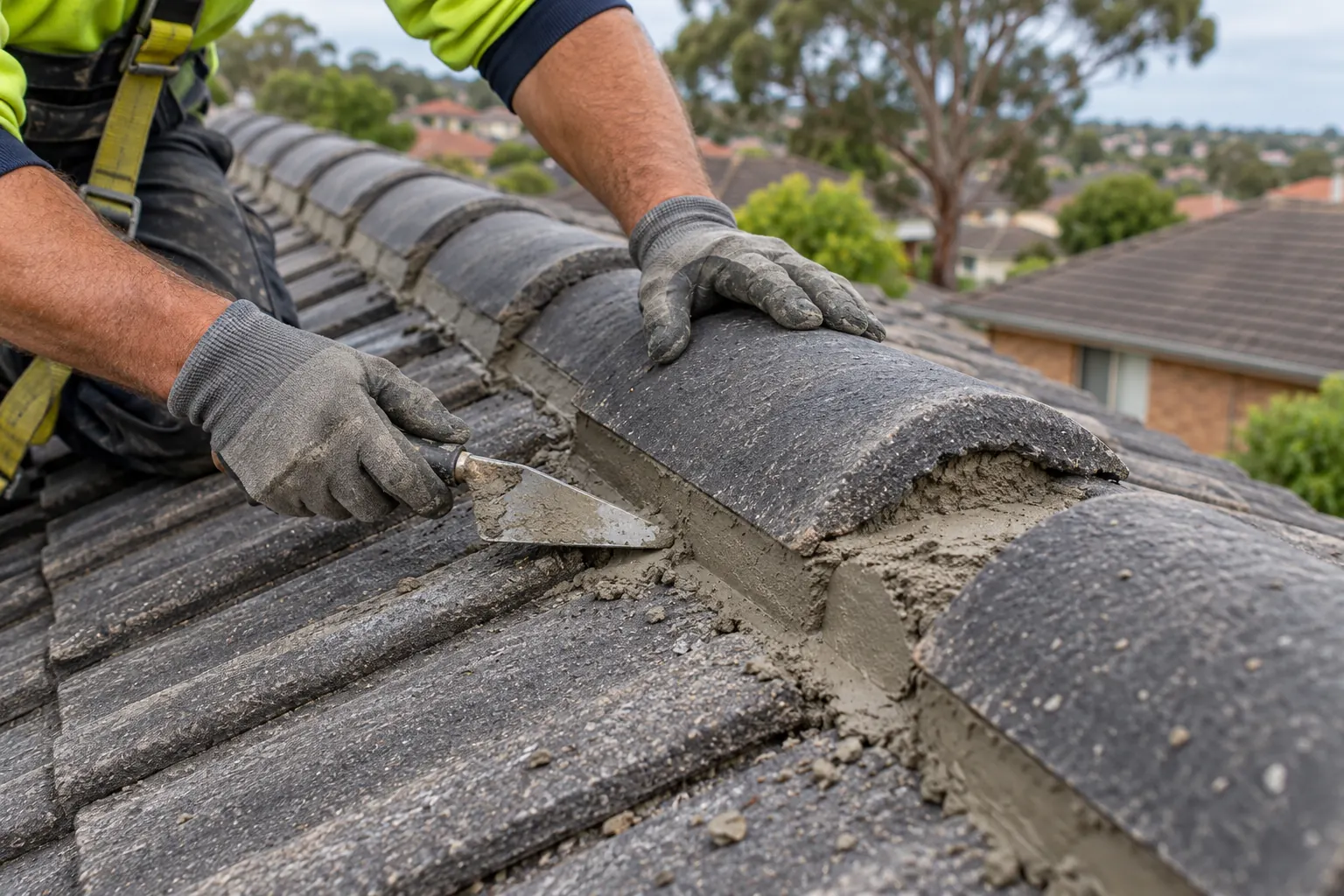
Where the mortar bed under the caps has broken down, the caps come off and are re-laid in fresh mortar. This is the part that separates a real restoration from a cosmetic one, and it is the part most often skipped.
A flexible pointing compound over the bedding joint. Flexible matters here specifically because of the ground movement — it accommodates the small shifts that crack rigid cement.
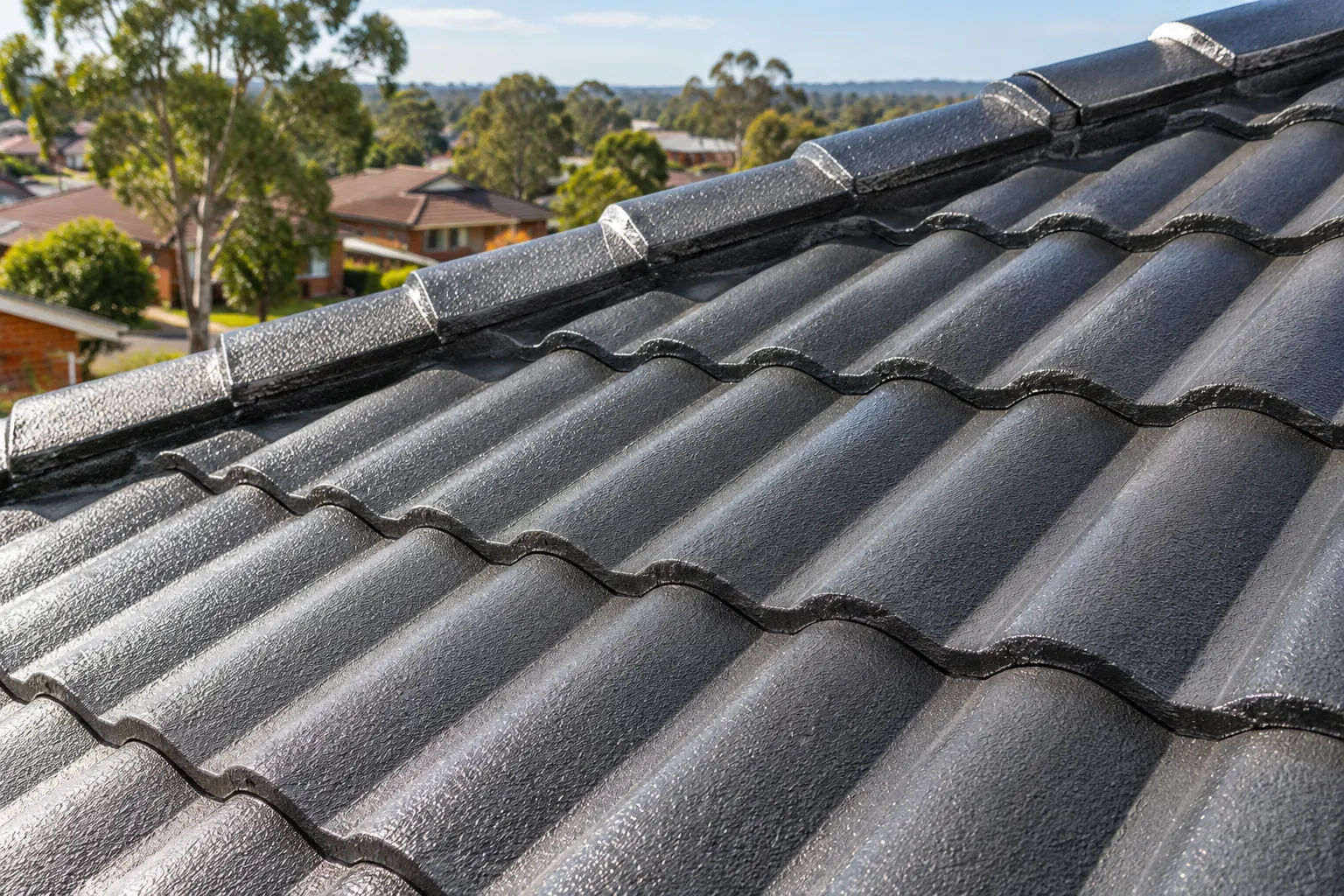
A primer or sealer suited to the tile, then membrane coats in the colour you have chosen. Applied in the right conditions, not sprayed onto a damp roof to hit a deadline.
Site cleared, gutters flushed again, written workmanship warranty on the completed work.
Call (02) 4705 5200 and we will come and tell you which stage your roof is at.
| Signs restoration is the right spend | Signs it is not |
|---|---|
| Tiles sound and strong underfoot | Tiles crack or crumble when walked |
| Pointing cracked, bedding failing | Tiles delaminating, surface flaking away |
| Faded or mossy surface, no structural issue | Multiple unrelated leaks across the roof |
| One or two rusted valleys | Sagging ridge or valley lines |
| Roof never restored, or last done 15+ years ago | Already restored recently and failing again |
If you are in the right-hand column, a restoration is lipstick. Look at roof replacement or a metal conversion instead. We would rather lose the restoration job than sell you one twice.
Worth being blunt about, because the industry is not always:
Restoration is weather-dependent work. Through the warmer half of the year, western Sydney gets afternoon storm activity that can arrive quickly, which is why we stage the job so the roof is never left in a vulnerable state overnight and why coating days need a clear forecast. Autumn and early spring are generally the easiest windows. If your roof is actively leaking, that changes the priority — we repair first and restore later.
Free inspection, then an itemised written quote so you can see each of those lines separately.
Right across the council area, with most of the demand through the estate suburbs: Oakhurst, Hassall Grove, Plumpton, Glendenning, Dean Park, Woodcroft, Lalor Park, Kings Langley and Seven Hills.
Is your roof due or is it done? Call (02) 4705 5200 or ask for a free inspection and you will get a straight answer either way.
Leak tracing and tile repairs across Blacktown, where hail damage and tired concrete tile drive most of the work.
Learn more →Re-roofing for Blacktown post-war fibro and brick-veneer homes, and for estates where the original tile has failed all at once.
Learn more →Colorbond installation and tile-to-metal conversions across Blacktown, Mount Druitt and the newer Schofields and The Ponds estates.
Learn more →Gutter and downpipe replacement built for western Sydney storm volume, with leaf guard where it is needed.
Learn more →Hail and storm response across Blacktown, with a documented inspection suitable for an insurance claim.
Learn more →Independent roof inspections and written reports across Blacktown for buyers, owners and insurers.
Learn more →Tell us what you need and we'll get straight back to you. Prefer to talk? Call (02) 4705 5200 and speak to someone local.
Call (02) 4705 5200No, and anyone who treats it that way is selling you a few good-looking years. The work that matters is structural to the roof surface: broken tiles replaced, ridge caps rebedded in fresh mortar where the bedding has failed, and the joint repointed with a flexible pointing compound. The coating goes on last and protects the tile surface. Coating a roof with cracked bedding underneath is money wasted.
Two reasons stack up locally. The clays over the Wianamatta shales of the Cumberland Plain are moderately reactive, so they swell in wet weather and shrink in dry, and the house moves with them. Rigid cement mortar does not. Add forty years of thermal cycling on a dark roof through western Sydney summers and the bedding eventually loses its grip on the caps.
Broadly, the 1980s and 1990s brick-and-tile stock — Oakhurst, Hassall Grove, Woodcroft, Glendenning, Dean Park, Quakers Hill and similar. Those tiles are usually still strong and the failure is in the pointing, the valleys and the surface coating. The older 1960s estate roofs are more of a case-by-case call, and some are genuinely past it.
Allow several days on a typical single-storey home: a day or so to clean and make repairs, time for rebedding and repointing, then the coats. Each stage needs the roof dry, so a wet week or an afternoon storm cell can push the schedule. We would rather lose a day than seal moisture under a coating, because that is how a coating lifts within a year.
On a sound tile roof, a properly rebedded, repointed and recoated roof buys you many years before the next round of maintenance, and it fixes the leak paths at the ridge and valleys at the same time. What it cannot do is add strength to tiles that have gone porous or brittle. If the inspection shows that, we will tell you to spend the money on a replacement instead.